



The sixth chapter of the Book of Genesis stands as one of the most intensely debated, enigmatic, and foundational passages in the entire canon of Sacred Scripture.
For centuries, theological discourse surrounding these twenty-two verses has been dominated by localised controversies: the anatomical identity of the Nephilim, the structural dimensions of the ark, and the precise boundary-crossing of the “sons of God.”
However, when viewed through the comprehensive lens of the whole counsel of God, a deeper structural reality emerges. Genesis 6 is not an unexpected historical detour or an emergency intervention by a Creator caught off guard.
Rather, it represents a monumental manifestation of God’s absolute majesty, total foreknowledge, and unyielding sovereignty.
This commentary on Genesis 6 will move beyond conventional surface-level debates to analyse the overarching theological architecture of the chapter.
We will explore how this critical juncture of history serves as a cosmic battlefield where God fiercely protected a specific, untainted human bloodline to secure the future incarnation of Jesus Christ, executing a flawless redemptive blueprint declared from eternity past.
The Edenic Blueprint: Tracing the Thread from Genesis 3
To construct a robust Genesis 6 commentary, one cannot begin at the first verse of the sixth chapter.
The structural foundation of the Deluge narrative was laid in the dust of the Garden of Eden. The moment the rebellion occurred in Genesis 3, humanity assumed that the script of creation had spun into permanent chaos.
The curse fell, the ground was fractured, and death entered the cosmos.
Yet, precisely within the wreckage of human failure, God uttered the first gospel declaration:
Genesis 3:15 LSB And I will put enmity Between you and the woman, And between your seed and her seed; He shall bruise you on the head, And you shall bruise him on the heel.”
This legal decree established the ultimate trajectory of human history.
Before Adam and Eve were expelled from paradise, the end was already declared.
The cross of Calvary was fixed into the divine timeline.
God was not reacting to a crisis; He was executing an immutable blueprint.
This decree established a vital reality: salvation would come explicitly through a physical, human lineage, the “seed of the woman.”
From that exact second, a cosmic war was declared upon human biology.
The spiritual forces of darkness understood the parameters of the decree.
If the adversary could corrupt, dilute, or eliminate the specific human lineage descending from Adam, the promised Saviour could never legally be born.
The warfare that reaches its zenith in Genesis 6 is the direct outworking of the enmity established in Genesis 3.
This sovereign design is further emphasised in the immediate aftermath of Eden.
In Genesis 4, we witness the initial fracturing of the human line through the narrative of Cain and Abel.
When Cain’s heart hardened with jealousy, God issued a sobering warning regarding the mechanics of the fallen human will: “Sin is crouching at your door; it desires to have you, but you must rule over it” (Genesis 4:7).
God possessed absolute foreknowledge of the choice Cain would make. He knew the blood of righteous Abel would cry out from the ground, and He knew the line of Cain would become an incubator for human pride, tyranny, and rapid technological rebellion.
Yet, the collapse of Cain did not stall the divine purpose. God sovereignly bypassed the murderer’s line and established the line of Seth, ensuring that the calling and the promise remained perfectly anchored.
The Sentinel of Timing: The Translation of Enoch
As the chronological timeline marches through the genealogies of Genesis 5, the narrative rhythm is defined by a heavy, repetitive cadence: “and he died... and he died... and he died.”
This cycle highlights the legal reality of the curse of Adam. However, the sequence is abruptly shattered by the appearance of Enoch:
Genesis 5:24 LSB Enoch walked with God; and he was not, for God took him.
Within the broader context of an accelerating global collapse, the sudden extraction of Enoch serves as a critical prophetic checkpoint.
Why did God intervene in this specific manner, at this specific coordinate in history?
Enoch was established as a cosmic sentinel.
His sudden removal from the material plane demonstrated that God remains the absolute master of life, death, and historical timing.
The translation of Enoch was a sovereign proclamation to that generation, and to every generation that followed, that God knows exactly who finishes their race.
Enoch’s life proves that God’s eyes scan the earth to identify and preserve the solitary individual who walks in alignment with Him, regardless of the surrounding cultural decay.
This event served as the final structural marker before the cosmic boundaries were explicitly breached in the days of Noah.
The Cosmic Boundary Crisis: The Infiltration of the Watchers
Genesis 6 opens with a description of a profound systemic crisis that threatened the very continuation of humanity:
Genesis 6:1-2 LSB Now it happened, when men began to multiply on the face of the land, and daughters were born to them, (2) that the sons of God saw that the daughters of men were good in appearance; and they took wives for themselves, whomever they chose.
The identity of the “sons of God” (Benei HaElohim) has historically generated three primary interpretive frameworks within biblical scholarship:
The Sethite View
Core Proposition - The righteous line of Seth intermarried with the rebellious line of Cain.
Theological Focus - The danger of spiritual compromise within human relationships.
The Dynastic View
Core Proposition - Tyrannical, demonic ancient rulers and kings practised polygamy and self-deification.
Theological Focus - The abuse of political power and human hubris.
The Angelic/Watcher View
Core Proposition - Fallen celestial beings crossed ontological boundaries to cohabit with human women.
Theological Focus - A cosmic violation of creation boundaries to corrupt human flesh.
When evaluated against the linguistic data of the Old Testament (where Benei HaElohim consistently denotes celestial beings, as seen in Job 1:6, 2:1, and 38:7) and the New Testament commentary in Jude 6 and 2 Peter 2:4, the narrative reveals a profound crossing of a cosmic boundary.
The Watchers abandoned their proper dwelling plane to integrate themselves into the human reproductive cycle.
Through a rigorous theological lens, we see that this infiltration was not a random act of chaotic lust.
It was a calculated, systemic attempt to pollute the human genome.
By introducing an unauthorised celestial element into the human bloodstream, the adversary sought to permanently corrupt the pure lineage connecting Adam to the future Messiah.
If all human flesh could be hybridised or corrupted, the legal conditions required for the birth of the seed of the woman, a fully human Saviour, would be permanently voided.
The text records the horrifying results of this infiltration: the emergence of the Nephilim, the capitalisation of ancient tyranny, and a world where “every inclination of the thoughts of the human heart was only evil all the time” (Genesis 6:5).
The earth had become radically distorted, filled with violence (chamas).
Yet, this dark escalation did not catch heaven off guard.
God allowed this cosmic crisis to occur specifically to manifest His ultimate sovereignty through His response. The rebellion of the Watchers was permitted to reach its absolute zenith so that the divine counterstrategy would demonstrate that no spiritual wickedness or corruption could ever derail the eternal decree of the Almighty.
The Genetic Vault: Noah as the Imperfect Placeholder
In the midst of an infected, violent, and ruined planet, the narrative turns on a single Hebrew conjunction:
Genesis 6:8 LSB But Noah found favor in the eyes of Yahweh.
This is the first explicit mention of the concept of “grace” (chen) in the biblical canon.
It marks a foundational theological pattern: God’s judgment is never a chaotic, reactive explosion of anger; it is a controlled act of justice, always accompanied by a remnant preserved entirely by grace.
To understand the nature of Noah’s selection, we must analyse the precise terminology used in Genesis 6:9: “Noah was a righteous man, blameless in his generations.”
The Hebrew word translated here as “blameless” is tamim. Crucially, this term is a physical and sacrificial descriptor. Tamim is the exact word used throughout the Old Testament to specify that a sacrificial lamb must be without physical blemish, defect, or spot.
Therefore, a precise Genesis 6 commentary must emphasise that Noah’s primary qualification was not an absolute moral perfection, but rather the biological purity of his lineage.
His bloodline remained untainted by the cosmic corruption of the Watchers. His ancestry traced directly back to Adam through the unbroken, unpolluted line of Seth.
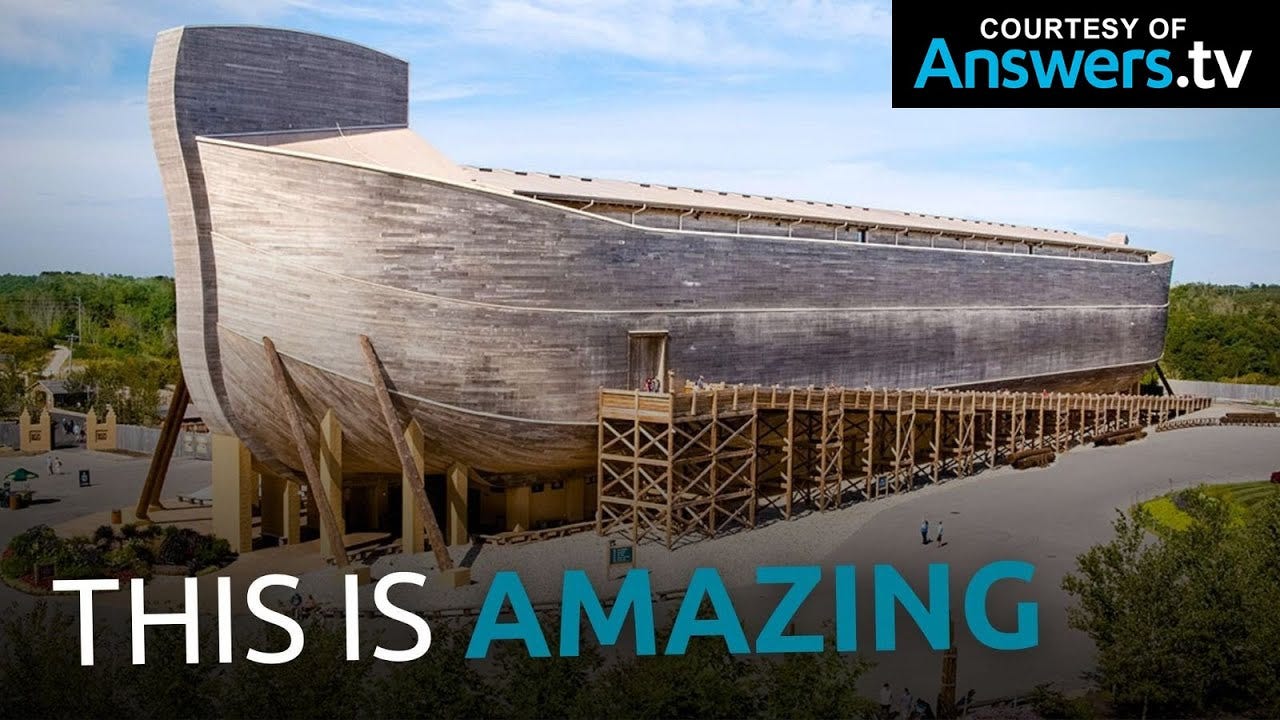
Consequently, the ark was designed to function as a genetic sanctuary.
It was a physical vault constructed under divine specification to isolate and protect the last remaining strain of unblemished human biology.
God’s primary objective in executing the flood was to cleanse the world of a spiritual and physical infection, ensuring that the legal path for the future incarnation of Jesus Christ remained open.
The Gravity of Foreknowledge: The Immediate Failure of the Post-Flood World
It is at this specific juncture that the true weight of divine foreknowledge becomes profoundly intense.
If human reasoning were writing the text, the narrative would suggest that God found a flawless family, wiped out the wicked world, and restarted humanity with a perfect, righteous elite who would successfully establish a holy kingdom.
But the text completely shatters this human expectation through its stark, deliberate silences and subsequent disclosures.
Throughout the description of the covenant and the building of the ark, the text remains completely silent regarding the spiritual stature of Noah’s wife, his three sons, or their wives.
They are named, but they are completely obscured by the narrative focus on Noah alone. The text explicitly attributes the walking with God, the righteousness, and the covenantal calling to Noah alone.
The family was admitted onto the ark under the legal and spiritual umbrella of Noah’s obedience, not because they possessed an identical spiritual stature.
As Isaiah 46:10 declares, God sees and declares
Isaiah 46:10 LSB Declaring the end from the beginning, And from ancient times things which have not been done, Saying, ‘My counsel will be established, And I will accomplish all My good pleasure’,
This means that before a single drop of rain fell upon the ancient earth, God possessed absolute, uninterrupted knowledge of the post-flood timeline.
He knew the exact fate of Noah’s three sons.
He knew that the moment the ark settled on the dry peaks of Ararat, human frailty, sin, and rebellion would instantly re-emerge.
He knew the exact nature of the moral collapse that would occur in the vineyard in Genesis 9, where Ham would dishonour his father.
He knew that the descendants of these identical sons would gather on the plains of Shinar in Genesis 11 to build the Tower of Babel in direct, defiant opposition to His command to fill the earth.
This reality reframes our entire understanding of Genesis 6.
God did not execute the Flood under the illusion that it would permanently cure the internal disease of human sin.
He knew the human heart would remain radically broken.
He knew the human will would continue to drag individuals toward iniquity.
Yet, in His infinite sovereignty, He chose to save this specific family anyway.
Why?
Because the survival of the line was not dependent on human performance, it was anchored entirely in the divine destiny attached to the bloodline.
God did not require Noah’s descendants to be spiritually flawless to preserve the seed; He required them to be genetically human, legally linked to Adam, and alive.
They were sovereignly sustained placeholders, keeping the biological door open until the only truly Righteous One could step through the thresholds of history.
The Nature of Forgiveness: Restorative Sovereignty
This tension between persistent human failure and unchanging divine destiny forces an encounter with the true biblical nature of forgiveness.
When we witness the immediate re-emergence of sin after the flood, we are compelled to ask:
Is divine forgiveness merely a legal clearing of debt, or does it serve a more invasive purpose?
The answer is illustrated centuries later in the life of King David, another vital link in the Messiah’s bloodline.
Like the post-flood world, David experienced catastrophic personal failure, bowing his knee to his own pride, lust, and violence.
Yet, his cry of repentance in Psalm 51 exposes the exact spiritual mechanics that bridge human collapse and divine foreknowledge:
Psalms 51:10 LSB Create in me a clean heart, O God, And renew a steadfast spirit within me.
David used the Hebrew word bara, the distinct verb reserved exclusively for divine creation out of nothing, the same word utilised in Genesis 1:1.
David recognised that his natural human will was utterly bankrupt and incapable of sustained righteousness.
Through this lens, we see that forgiveness is the active intervention of God whereby He clears the paralysing debt of our iniquity, specifically to uncover the future glory of a totally submitted will.
In our fallen condition, human nature views “submission” as a humiliating loss of autonomy.
But within the biblical economy, the total, voluntary submission of the human will to the Creator is the highest expression of human freedom and glory.
Forgiveness is the surgical tool God uses to break the legal dominion of sin, melting the rigid stubbornness of our fallen nature through the weight of grace, and recalibrating the individual to finish their assigned race.
God knew the full extent of David’s incoming failure before he was ever anointed king, just as He knew Peter’s denial before the rooster crowed, and just as He knew the failures of Ham, Shem, and Japheth before they stepped onto the ark.
Forgiveness is the sovereign mechanism that ensures human failure can never have the final word over divine destiny.
The Metaphysical View: Standing on the Chronological Summit
The ultimate takeaway from Genesis 6 is the breathtaking majesty of God, enthroned above the chaos.
As modern readers, we occupy a position of extraordinary spiritual privilege. Millions of individuals lived out their earthly existence in the middle of an unfinished sentence - prophets, priests, and kings who caught only fragmented glimpses of the unfolding redemptive arc.
They lived through the terrors of the Watchers’ infiltration, the silence of the wilderness, or the trauma of the exile, wondering if the covenant would fail.
But we have been born into an age where we can stand upon a chronological summit.
We possess the complete counsel of God’s Word.
We have the distinct ability to look backward across the entire panoramic canvas of history and see how every single thread, no matter how dark, messy, or contested, has panned out exactly as it was woven in the mind of God.
We can see how the severe de-creation of the Flood was a necessary, tactical act of surgical preservation.
We can trace the line from the genetic sanctuary of the ark, through the calling of Abraham, through the preserved lineage of David, straight to a stable in Bethlehem and an empty tomb outside Jerusalem.
We see that everything was perfect in its own way, flawlessly coordinated by a sovereign intellect that coordinates the failures of man to serve the glory of God.
Conclusion: The Sovereign Anchor for the Contemporary Believer
Genesis 6 stands as an immovable monument to the doctrine of divine sovereignty.
It strips away the illusion that humanity or dark spiritual forces can ever successfully hijack the timeline of God.
It proves that when the world reaches its darkest, most systemically corrupted zenith, the Almighty has already established His countermove from eternity past.
For the contemporary reader, this realisation brings profound peace.
The same God who knew the end of the antediluvian world, who carefully isolated the lineage of the Messiah, and who sovereignly secured the finish line for Noah despite the surrounding human collapse, is the God who holds your personal timeline today.
He is not caught off guard by the cultural shifts of our generation, nor is He paralysed by the structural failures of our immediate environments.
He knows your starting blocks, He possesses full foreknowledge of your stumbles, and in His unyielding grace, He has already established your finish line.
Look past the immediate controversies of the age, ascend to the height of His Word, and rest in the absolute majesty of the One who declares the end from the beginning.
My Jesus-given purpose is to support the remnant. For a full explanation of this purpose, click this link.


